components
Frequency Converters: Specifying the Module
A converter is a mixer plus everything that makes the mixer usable. What the preselector, the LO and the IF stage each set, and how to specify them together.
Section
Component-family guides covering YIG oscillators and filters, microwave synthesizers, DROs, frequency converters, mixers and multipliers.
Selection guides for the component families that make up a microwave signal chain, organised by what each part does and how it is specified.
Start with the two YIG families that are on the site today: YIG-tuned oscillators when the part is a wideband source, and YIG-tuned filters when it is a tracking preselector. Both are magnetically tuned, so they are specified with their drivers, not as bare resonators.
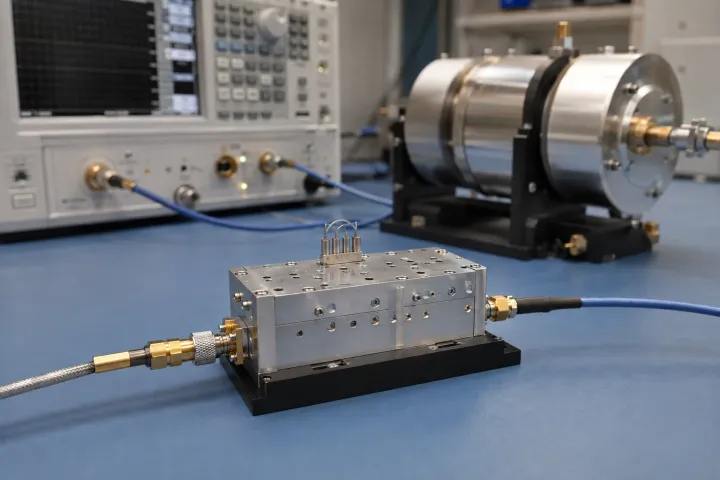
Microwave frequency synthesizers cover the source that has to be accurate and programmable rather than merely wide, and frequency converters cover the assemblies that move a band instead of generating one. DROs, mixers and multipliers will land here as those pillars are written. The frequency-plan versions of converter and mixer questions stay in RF, IF and LO and upconverter vs downconverter.
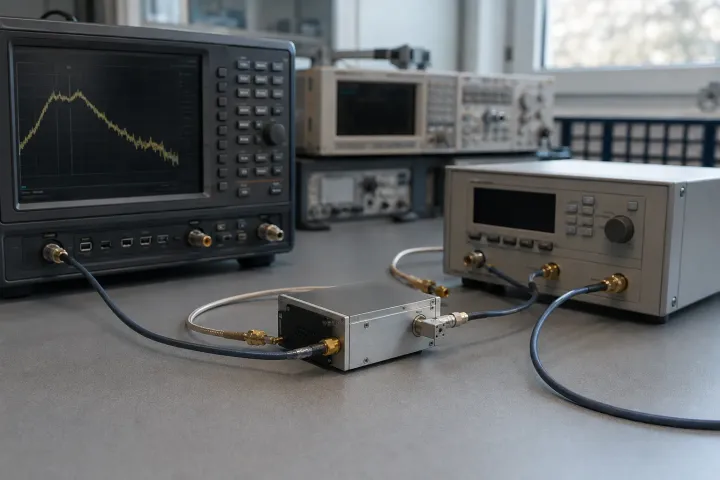
A converter is a mixer plus everything that makes the mixer usable. What the preselector, the LO and the IF stage each set, and how to specify them together.
How a phase-locked microwave synthesizer trades resolution against lock time and spurious content, and where a YIG oscillator earns its place as the loop VCO.
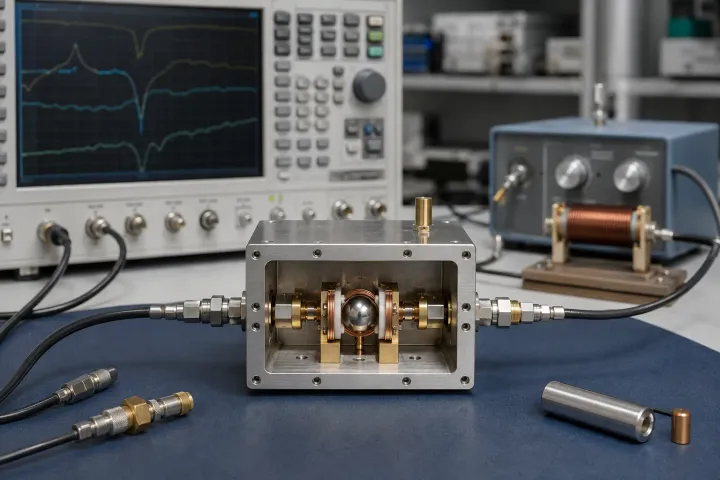
What stage count, coupling and coil current actually set on a YIG filter, and when a cavity or a switched bank is the better preselector.
What each YIG-tuned oscillator specification actually constrains, how the driver changes the answer, and when a VCO or DRO is the better choice.